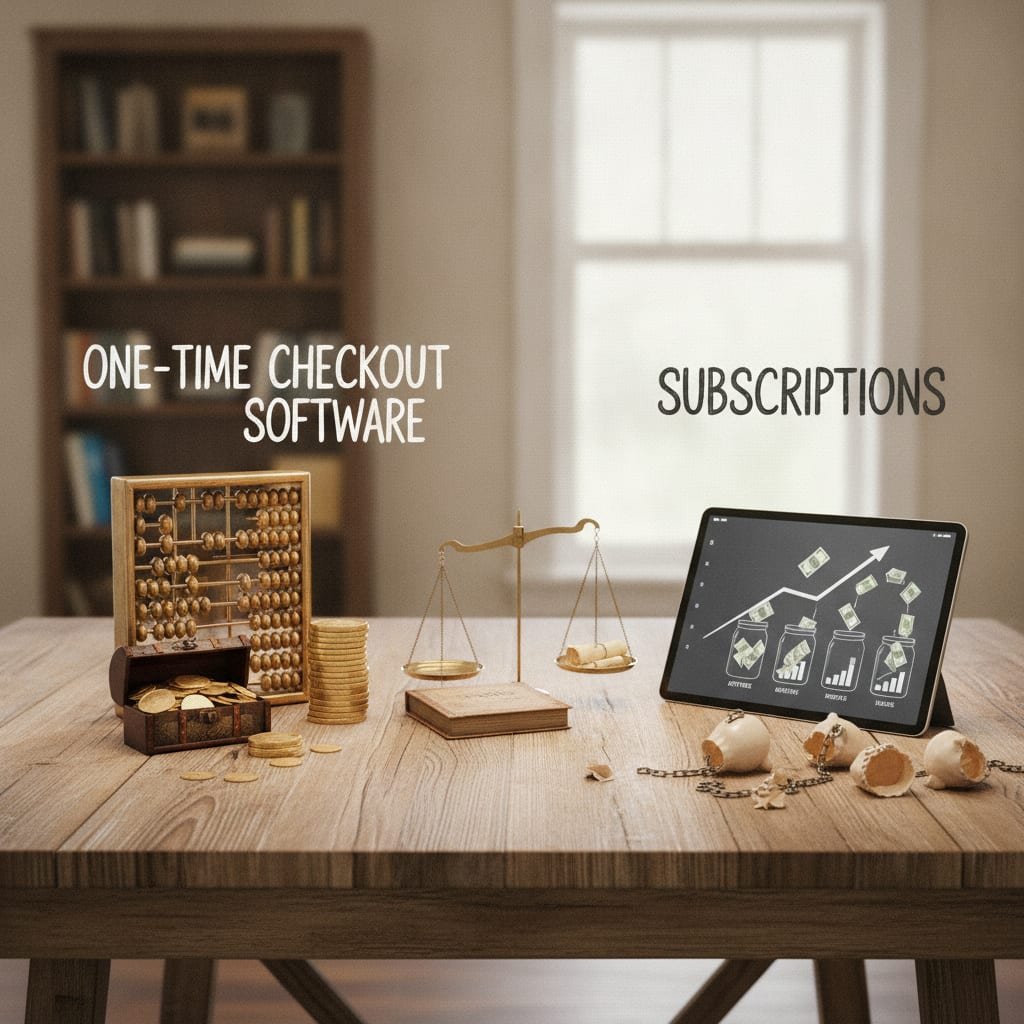
Checkout software with a one-time payment and no subscription means you buy a license once, install it, and keep 100% of every sale going forward — compared to marketplace-style checkout platforms that take 5% to 13% of revenue forever, no matter how long you've been a customer. The real distinction isn't "cheap vs. expensive," it's "cost that scales with your revenue vs. cost that doesn't." Below a certain sales volume, a percentage fee is cheaper. Above it, the license wins every month after.
TL;DR:
- A one-time checkout license costs the same whether you sell $500 or $50,000 a month; percentage-based platforms don't.
- Do the breakeven math: at a 5% commission, a $299 license pays for itself after $5,980 in sales. At 10%, it's $2,990.
- You still pay card network processing fees (around 2.9% + 30¢ per Stripe's published rates) either way — that part never goes away.
- PCI DSS compliance, chargebacks, and tax reporting obligations apply to self-hosted checkout the same as they do to hosted platforms.
- "One-time fee" software can still bill you monthly for hosting, support, or updates — read the fine print before assuming it's truly one-time.
Table of Contents
- Checkout Software With No Subscription: What You're Actually Buying
- The Two Checkout Models, and Why They Cost So Differently
- The Real Math: When a One-Time License Beats a Percentage Cut
- Compliance Doesn't Disappear Just Because the Subscription Does
- Crypto Checkout Without a Platform Skimming the Spread
- Tax Paperwork: Same Either Way
- Three Signs a "One-Time Fee" Tool Isn't Actually One
- Own the Checkout, Not Rent It
- Frequently Asked Questions
- Sources
Checkout Software With No Subscription: What You're Actually Buying
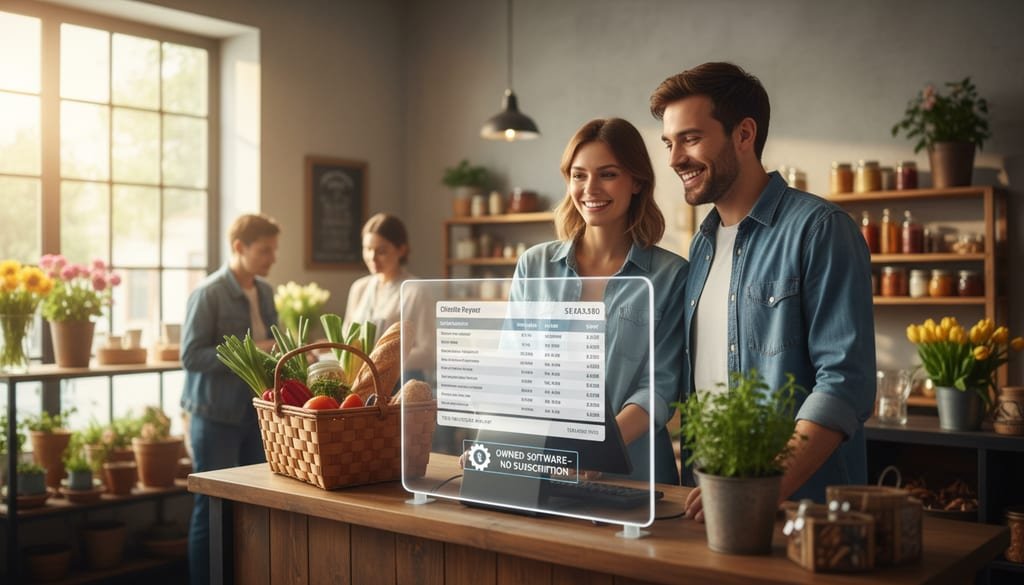
When a product is described as "checkout software, one-time payment, no subscription," it means ownership replaces rent. You pay once for a license, install the software (usually self-hosted, connected directly to your own Stripe account or crypto wallet), and there's no recurring bill tied to your sales volume afterward. Compare that to the marketplace model, where a platform hosts your checkout page, holds your funds briefly, and takes a cut — often 5% to 13% of every transaction — for as long as you use it.
The two models aren't just priced differently; they're structured differently. A subscription or commission fee scales with your success: the more you sell, the more the platform makes, regardless of whether its costs to serve you went up at all. A one-time license is flat. It costs the same the month you make your first sale and the month you make your five-hundredth.
The Two Checkout Models, and Why They Cost So Differently
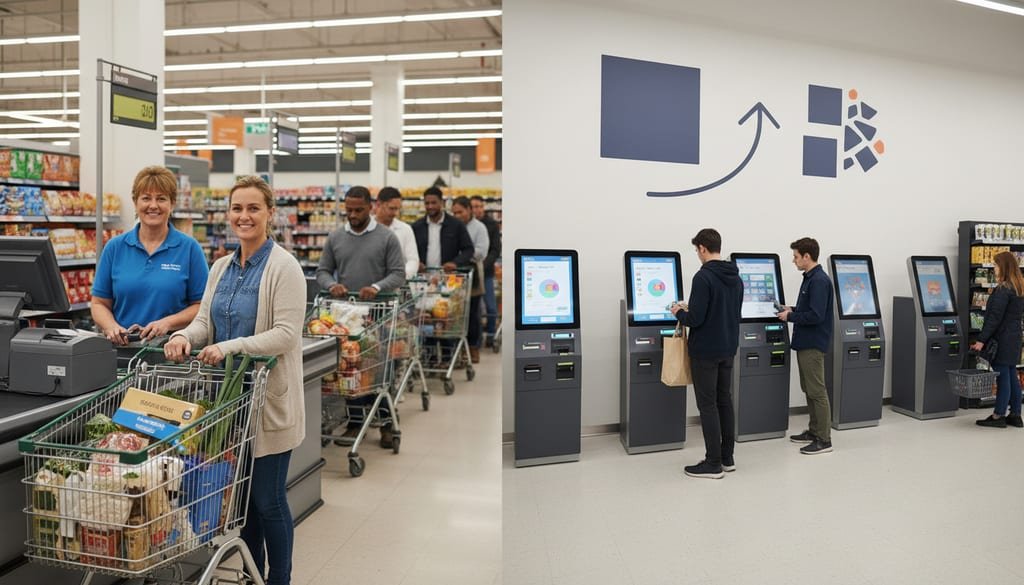
Marketplace-style checkout platforms bundle a lot into that percentage cut: hosting, fraud screening, customer support, and often payment processing itself. That bundling is convenient, which is exactly why these platforms are popular with creators who don't want to touch infrastructure. The tradeoff is that convenience never gets cheaper as you scale — it gets more expensive in absolute dollars, even though the platform's actual cost to process your transaction barely changes.
Self-hosted checkout software unbundles that. You still need a payment processor underneath — Stripe's published pricing runs around 2.9% plus 30 cents per card transaction in the US, and that fee exists no matter which checkout software sits on top of it. What a one-time license removes is the second fee: the platform's own commission layered on top of processing. For a deeper breakdown of how license pricing compares to SaaS-style billing across a full year, see One-Time License vs. SaaS Fees: What Actually Costs Less.
Pro Tip: Before comparing sticker prices, pull your last three months of transaction history from whatever platform you're using now and multiply your total revenue by its fee percentage. Most sellers underestimate what they've already paid because the fee is deducted before the payout ever hits their bank account — it never shows up as a line item you have to consciously approve.
The Real Math: When a One-Time License Beats a Percentage Cut

The breakeven point depends entirely on your commission rate and your sales volume. Here's the math at a $299 one-time license, compared against two common commission rates:
| Monthly Sales | Fee at 5% | Fee at 10% | $299 License (one-time, then $0/mo) |
|---|---|---|---|
| $1,000 | $50 | $100 | $299 up front, nothing after |
| $3,000 | $150 | $300 | Paid off within month one at 10% |
| $6,000 | $300 | $600 | Paid off within month one at either rate |
| $10,000 | $500 | $1,000 | Already paid off — pure savings going forward |
Break even on a $299 one-time license after $5,980 in total sales at a 5% commission rate, or after $2,990 at 10%. Every dollar after that is money the license saved you instead of a platform.
If you're doing less than a few hundred dollars a month, the commission model can genuinely be cheaper — you're paying for convenience you're not using much. If you're clearing even $1,000 to $2,000 a month consistently, the math flips fast, and it keeps flipping in your favor every month you keep selling. The full case for walking away from recurring platform fees, including what migration actually looks like, is covered in Stop Paying Recurring Fees for Your Checkout Platform.
Compliance Doesn't Disappear Just Because the Subscription Does
Switching to a one-time license doesn't mean switching away from the rules that govern card payments. Any business accepting card transactions — hosted or self-hosted — needs to meet PCI Security Standards Council requirements. The council sets PCI DSS, the baseline data security standard for anyone handling cardholder data, and it applies regardless of which software touches your checkout page.
PCI DSS compliance is required for any business accepting card payments — not just the ones running their own checkout infrastructure.
In practice, this is less burdensome than it sounds for most self-hosted setups, because tools built on top of Stripe typically never store raw card numbers themselves; Stripe's own infrastructure handles that layer, and your compliance scope narrows considerably as a result. Still, it's worth confirming with any checkout software you evaluate exactly where card data touches your servers versus the processor's — that answer determines how much compliance work falls on you.
Crypto Checkout Without a Platform Skimming the Spread
Crypto payments add a second place where percentage-based platforms quietly take a cut: the conversion spread. Many hosted platforms that support crypto route it through a third-party processor and mark up the exchange rate, on top of whatever commission they already charge on card sales.
- Bitcoin and Lightning Network payments. Lightning settles in seconds with near-zero fees, which makes it genuinely useful for small transactions where a card network's 30-cent minimum would eat the margin entirely.
- Stablecoins. USDC and similar stablecoins let you accept crypto without taking on price volatility between the sale and the moment you convert or hold.
- Wallet ownership. Payments routed directly into a wallet you control skip the step where a platform custodies funds, even briefly, before paying you out.
Software that connects straight to your own wallet, rather than a platform-managed custodial account, removes that spread markup entirely — you receive exactly what the buyer sent, converted at the rate you choose, when you choose it.
Tax Paperwork: Same Either Way
Switching checkout tools doesn't change your tax obligations, and it's worth saying plainly so nobody assumes otherwise. In the US, payment processors report transaction volume to the IRS via Form 1099-K once you cross the applicable threshold, whether that processing happens through a marketplace platform or your own Stripe account. Outside the US, VAT and sales tax collection obligations depend on where your buyers are located, not on which checkout software you use — a self-hosted tool doesn't exempt you from collecting VAT in the EU any more than a hosted one would. The specific thresholds that trigger a collection requirement in different countries are laid out in Who Collects Sales Tax and VAT Online? The Thresholds That Matter.
Three Signs a "One-Time Fee" Tool Isn't Actually One
Not every product marketed as a one-time purchase stays that way once you dig into the pricing page. Watch for these before you buy:
- Mandatory hosting fees. If the vendor hosts the software for you and bills monthly for that hosting, the license fee is really a down payment on a subscription with extra steps.
- Paid tiers for updates. Some tools sell the license once but gate security patches or new features behind an annual renewal — check how many months of updates are actually included before comparing prices.
- Transaction caps. A "one-time fee, unlimited sales" claim sometimes turns into a per-transaction fee once you cross a volume threshold buried in the terms.
If you're comparing specific self-hosted tools against each other rather than against a marketplace platform, Best Self-Hosted Ecommerce Checkout Tool: A Buyer's Comparison walks through what to check on each one's pricing page line by line.
Own the Checkout, Not Rent It
ReplaPay is a self-hosted checkout license: $299 once, and your card and crypto payments go directly into your own Stripe account and your own wallet from then on — no commission on any sale, ever. It includes 12 months of software updates and 30 days of setup support, plus a built-in Stripe fee calculator so you can run your own breakeven math before you buy, using your actual sales numbers instead of ours.
The honest caveat: you're responsible for your own hosting and for keeping the software updated after that first year unless you renew, which suits someone comfortable running their own checkout infrastructure far better than someone who wants everything managed for them. If that's not you, a hosted marketplace platform may genuinely be the better fit — but if you're moving real volume and tired of watching a percentage disappear from every sale, compare the Gumroad-style alternatives and check the spec sheet, including ours, before deciding.
Frequently Asked Questions
Is checkout software with no subscription actually cheaper than a commission-based platform?
It depends on your volume. Below roughly $3,000 to $6,000 in total lifetime sales (the exact point depends on the commission rate), a percentage fee can cost less than a one-time license; above that threshold, the license is cheaper every month afterward because its cost never increases.
Do I still pay Stripe's processing fees if I use one-time checkout software?
Yes. Card network processing fees, such as the roughly 2.9% plus 30 cents Stripe publishes on its pricing page, apply no matter which checkout software sits on top of the connection — a one-time license removes the platform's commission, not the underlying processing cost.
Does self-hosted checkout software still need to meet PCI compliance standards?
Yes. PCI DSS requirements set by the PCI Security Standards Council apply to any business accepting card payments, whether the checkout is hosted by a marketplace platform or run on your own server.
Will switching to a one-time license change my tax reporting obligations?
No. Reporting thresholds like the IRS Form 1099-K and VAT collection rules in the EU are based on your transaction volume and buyer location, not on which checkout software processes the payment.
Can one-time checkout software accept crypto payments too?
Many self-hosted tools support Bitcoin, Lightning Network, and stablecoin payments routed directly into a wallet you control, which avoids the conversion spread markup some hosted platforms add on top of their commission.
Sources
- Stripe Pricing | Stripe
- PCI DSS Standards | PCI Security Standards Council
- Understanding Your Form 1099-K | Internal Revenue Service